How Group Therapy & Peer Support Help Healing
Heal Together at Trinity House
At Trinity House Sober Living in Marysville, WA, group support and peer community are central to how our residents heal and grow. You don't have to do this alone.
📞 (425) 474-3210 | 🌐 trinityhouse.info
Introduction: No One Heals in Isolation
One of the most enduring truths of addiction recovery is that it cannot be done alone. While the decision to get sober is deeply personal and individual, the process of sustaining sobriety is fundamentally communal. The most effective recovery frameworks — from 12-Step programs to modern clinical treatment — place connection, shared experience, and mutual accountability at their center. Two of the most powerful expressions of that community-based healing are group therapy and peer support.
This article explores how group therapy and peer support work, why they are especially effective in addiction recovery, and how the environment of a sober living home naturally creates both. Whether you are new to recovery or returning to it, understanding these tools can help you use them more intentionally and more powerfully.
What Is Group Therapy in the Context of Recovery?
Group therapy is a structured therapeutic modality in which a trained facilitator — typically a licensed therapist or counselor — leads a group of individuals through a shared therapeutic process. In addiction recovery settings, group therapy sessions typically involve skills-building, emotional processing, trauma work, cognitive restructuring, or focused discussions of recovery-related topics. Group therapy is distinct from 12-Step meetings, though both are valuable. Where 12-Step meetings are peer-led and spiritually oriented, group therapy is clinically facilitated and evidence-based in purpose.
Types of Group Therapy in Addiction Recovery
Several types of group therapy have been validated for use in addiction recovery settings:
- Cognitive Behavioral Therapy (CBT) Groups — Help participants identify and change distorted thought patterns that fuel addiction and emotional dysregulation.
- Dialectical Behavior Therapy (DBT) Groups — Focus on skills like emotional regulation, distress tolerance, interpersonal effectiveness, and mindfulness.
- Trauma-Focused Groups — Address the trauma history that underlies much addiction, providing a safe community container for processing difficult experiences.
- Relapse Prevention Groups — Focus specifically on identifying triggers, developing coping plans, and building the skills needed to navigate high-risk situations without using.
- Process Groups — Provide a space for members to explore interpersonal dynamics, express emotions, and receive real-time feedback.
The Power of Peer Support
Peer support refers to the mutual, non-clinical support provided by people who share a common experience — in this case, addiction and recovery. Unlike professional therapy, peer support is rooted in shared identity: I understand what you're going through because I've been there too. That understanding creates a particular kind of trust and connection that is not replicable in any professional relationship.
Research consistently shows that peer support is one of the most effective components of long-term recovery. People who have strong peer support networks in recovery are significantly less likely to relapse, more likely to maintain stable housing and employment, and report higher levels of wellbeing and life satisfaction than those without peer support.
Why Shared Experience Is So Healing
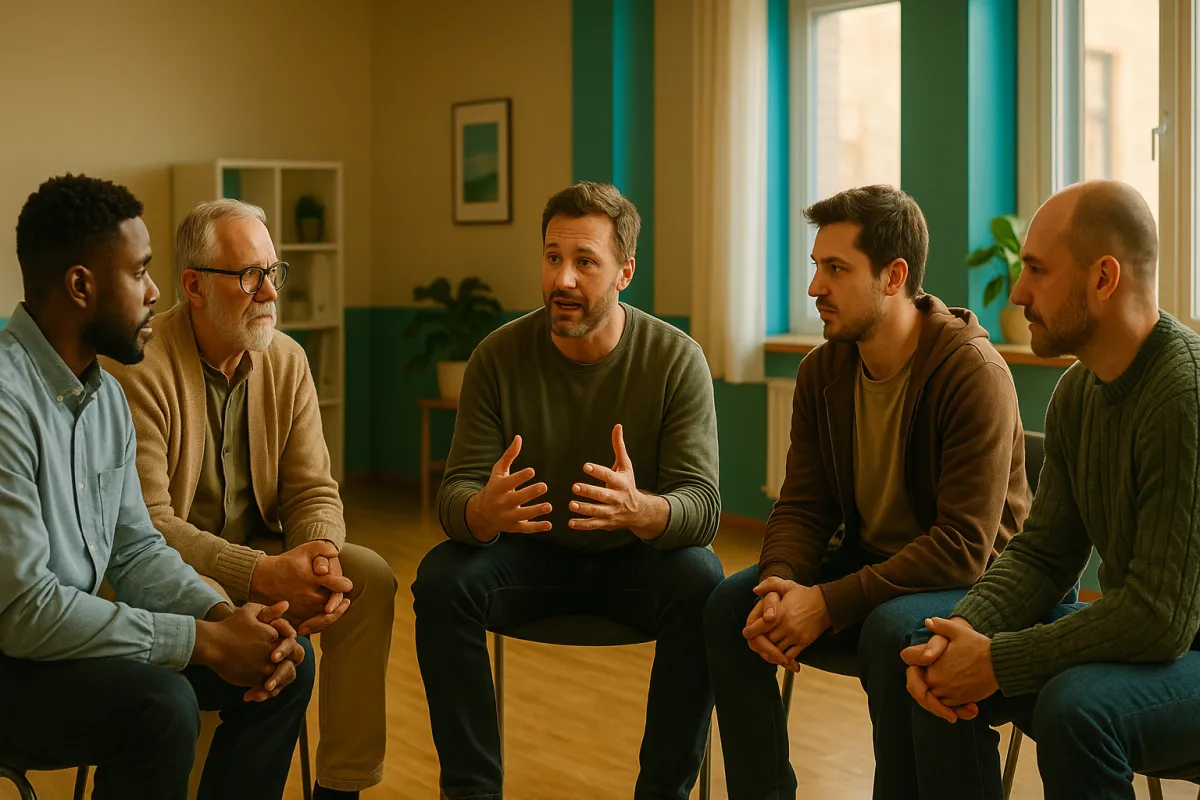
One of the most isolating aspects of addiction is the belief that no one else could understand — that your specific shame, your specific loss, your specific struggle is too dark or too personal to share. Group therapy and peer support shatter that illusion. When you sit in a circle and hear another person describe exactly what you have been feeling, something shifts — the shame loses its power, and the burden becomes shareable.
This phenomenon is what group therapists call universality — the recognition that your experience, however private it feels, is shared. That recognition is among the most healing moments available in recovery. It communicates: you are not alone. You are not uniquely broken. You are human, and there are others here who know the path you are walking.
Accountability Within the Group
Both group therapy and peer support communities create a context of natural accountability that is profoundly supportive of sobriety. When you are known by a group — when your goals and struggles are visible to others who care about you — staying on the path becomes both more motivating and more supported. The accountability within a sober living home is a particularly rich form of peer support: you live with your community, share daily life with them, and are mutually invested in each other's wellbeing. This is not surveillance — it is the kind of caring, present accountability that says I'm watching out for you because I want to see you make it.
How Sober Living Creates Natural Peer Support
One of the most underappreciated benefits of sober living homes is the organic peer support they generate simply through shared daily life. When men in recovery live together — eating together, navigating conflicts together, celebrating milestones together, holding each other accountable together — they are engaged in a form of intensive, continuous peer support that few other environments can replicate. The friendships formed in sober living homes are often described by alumni as the most significant and sustaining relationships of their entire recovery journey. These are people who knew you at your most vulnerable, who watched you struggle and grow, who chose sobriety alongside you.
Tips for Getting the Most from Group Therapy and Peer Support
- Show up consistently. The relational benefits of group require trust, which requires time. You cannot build trust by attending sporadically.
- Take risks. Sharing vulnerably is uncomfortable but essential. The depth of healing you experience is directly proportional to the depth of your honesty.
- Listen as much as you speak. Witnessing another person's struggle and recovery is itself a form of healing.
- Follow through on commitments. Accountability requires consistency.
Conclusion: Together Is Better
There is a reason that the most enduring recovery programs in history are communal rather than individual. Human beings are wired for connection, and healing — real, lasting healing — happens in relationship. Group therapy and peer support are not additions to your recovery plan. They are foundational to it. Find your group. Show up. And let the healing that happens together take you somewhere you could never go alone.
Join the Trinity House Community
Trinity House Sober Living in Marysville, WA offers a peer community and structured group support environment where men in recovery heal together. Come experience the power of shared recovery.
📞 Call or Text: (425) 474-3210
Trinity House Sober Living — Marysville, WA