
Managing Anxiety Without Substances: Effective Tools
Mental Health, Recovery, Anxiety, Sober Living
Managing Anxiety Without Substances: Evidence-Based Tools That Work
By Erin Smith, Owner/Operator, Trinity House Sober Living
If you are in recovery and struggling with anxiety, you are not alone—and you are not broken. Anxiety in sobriety can feel overwhelming, especially when substances are no longer there to numb your feelings. Yet this season can also become one of the most powerful turning points in your life. With the right tools, support, and structure, managing anxiety without substances is not only possible—it is deeply healing and empowering. At Trinity House Sober Living in Bothell, WA, we see this transformation every day.
Why Anxiety and Addiction Are So Closely Linked
Anxiety and addiction often grow together, feeding off one another. For many people, substances began as a way to “take the edge off”—to quiet racing thoughts, ease social fears, or escape from painful memories. Over time, this coping strategy can turn into dependence, and then into addiction. What started as relief becomes a trap.
From an evidence-based perspective, anxiety and addiction share common pathways in the brain. Both involve the stress response system, reward circuitry, and learned patterns of avoidance. When anxiety is intense or chronic, the brain searches for anything that brings quick relief. Alcohol, opioids, stimulants, and other substances can temporarily change brain chemistry in ways that feel soothing, confident, or numb. This is one reason anxiety relapse triggers are so powerful in sober living and beyond—stress, fear, and uncertainty can stir up old neural pathways that associate relief with using.
How Substances Temporarily Mask Anxiety (and Why It Backfires)
Substances can feel like they “work” at first. Alcohol might loosen social anxiety. Benzodiazepines might quiet panic. Stimulants might distract from worry and low mood. In the short term, these effects can seem like a solution. But they are only a mask—a temporary cover over very real emotions and needs that remain unaddressed underneath.
Over time, the brain adapts. Tolerance builds, withdrawal symptoms emerge, and the nervous system becomes more sensitive to stress. Many people discover that their baseline anxiety actually gets worse the longer they use. Sleep suffers, relationships strain, and responsibilities pile up. The very thing that once seemed to help becomes a major source of anxiety itself—worry about the next drink, the next pill, being caught, or losing everything. This is why managing anxiety without substances is such an important foundation of long-term recovery and genuine anxiety recovery, not just symptom suppression.
What Happens to Anxiety Levels in Early Sobriety?
Early sobriety can feel like someone turned the volume up on your nervous system. Many residents arrive at Trinity House Sober Living and say, “I didn’t know I was this anxious until I stopped using.” This is a normal, predictable part of the healing process, and it does not mean sobriety is not working. It means your brain and body are recalibrating after being chemically numbed for a long time.
In the first weeks and months, you may notice:
- Racing thoughts, “what if” worries, or worst-case scenarios playing in your mind
- Physical symptoms like tight chest, rapid heartbeat, or restlessness
- Social anxiety—feeling exposed or awkward without the “liquid courage” of substances
- Sleep disruptions and vivid dreams as your brain detoxes and rebalances
This spike in anxiety in sobriety is sometimes called “sobriety anxiety” or “rebound anxiety.” It can be discouraging, but it is actually a sign that your system is waking up. When you have the right anxiety recovery tools and support, this phase becomes manageable—and temporary. Your nervous system can learn new patterns of calm, safety, and resilience that do not depend on substances.
Evidence-Based Tools for Managing Anxiety Without Substances
1. CBT for Anxiety Recovery: Changing Thoughts, Changing Feelings
Cognitive Behavioral Therapy (CBT) is one of the most researched and effective approaches for anxiety. CBT anxiety recovery focuses on identifying unhelpful thought patterns—like “I can’t handle this,” “Everyone is judging me,” or “If I feel anxious, I will relapse”—and gently challenging them with more balanced, realistic thoughts. When your thoughts shift, your feelings and behaviors begin to shift too.
In practice, CBT might look like:
- Keeping a simple thought log when anxiety spikes, writing down the situation, your thoughts, and the outcome
- Asking yourself, “What is the evidence for and against this thought?”
- Practicing more compassionate self-talk, such as, “This is hard, and I am learning new skills. I do not have to be perfect.”
2. Breathing Techniques: Calming the Nervous System in Real Time
Your breath is one of the fastest ways to send a “you are safe” signal to your body. Simple, evidence-based breathing techniques can lower heart rate, reduce muscle tension, and interrupt panic. They are powerful tools for coping with anxiety in recovery because they are always available—no equipment needed, no side effects, and they work even in the middle of a craving or trigger.
- 4–6 Breathing: Inhale gently through your nose for a count of 4, exhale slowly through your mouth for a count of 6. Repeat for 2–5 minutes.
- Box Breathing: Inhale for 4, hold for 4, exhale for 4, hold for 4. Visualize drawing a square with each phase of the breath.
3. Mindfulness: Learning to Stay Present Without Numbing Out
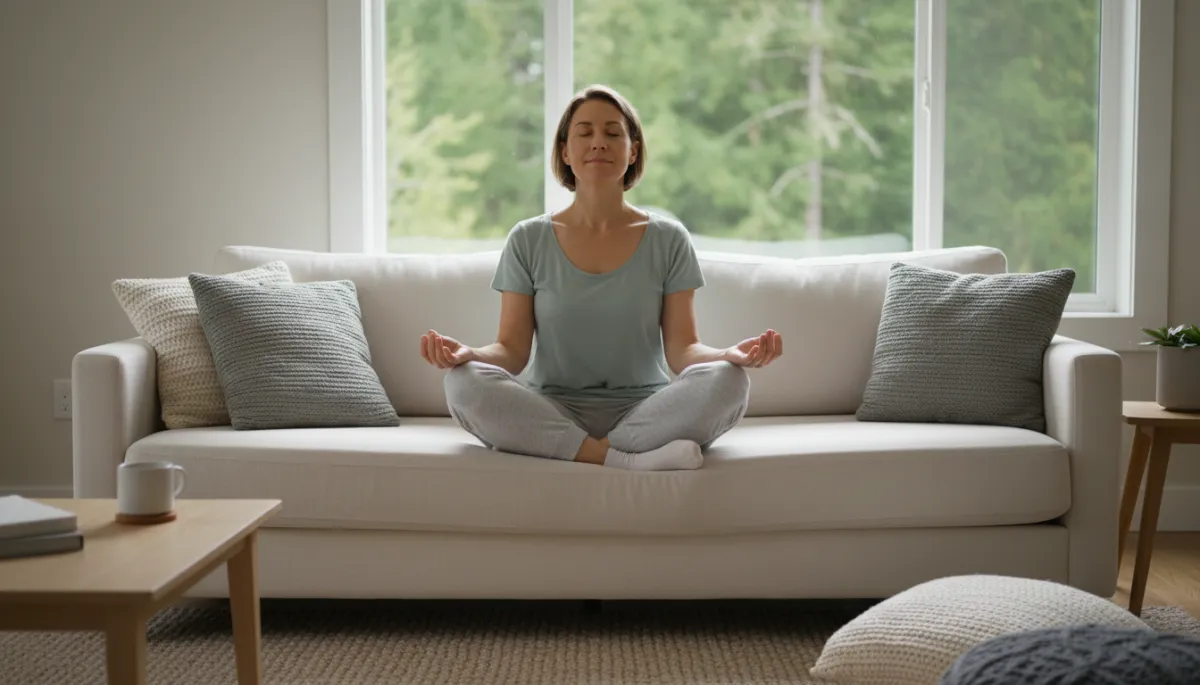
Mindfulness simply means paying attention, on purpose, to the present moment with curiosity instead of judgment. For people in recovery, mindfulness can be a powerful alternative to avoidance. Instead of escaping uncomfortable feelings with substances, you learn to notice them, name them, and ride them out safely.
Evidence shows that regular mindfulness practice can reduce anxiety, improve emotional regulation, and even change brain structure over time. Practices might include:
- Short guided meditations (5–10 minutes) focusing on breath or body sensations
- Mindful walking—feeling your feet on the ground, the air on your skin, the sounds around you
- “Name it to tame it”—quietly naming what you feel (“I notice fear,” “I notice tightness in my chest”) to create space between you and the emotion
4. Movement and Exercise: Using Your Body to Support Your Mind
You do not need intense workouts to benefit from movement. Research consistently shows that regular, moderate exercise can reduce anxiety, support sleep, and improve mood. For many residents, walking, light stretching, or yoga become essential anxiety recovery tools and forms of sobriety anxiety relief.
- Aim for 10–20 minutes of movement most days—walks around the neighborhood, gentle bodyweight exercises, or beginner yoga videos.
- Pair movement with mindfulness by noticing your breathing, your steps, and your surroundings.
5. Therapy and Support: You Don’t Have to Do This Alone
Individual therapy, group counseling, and peer support groups are all evidence-based ways to manage anxiety without substances. A therapist trained in CBT, trauma-informed care, or other anxiety-focused modalities can help you untangle the roots of your fear, develop personalized coping strategies, and process past experiences that may be fueling current anxiety in sobriety.
Peer support is equally powerful. Hearing “me too” from others in sober living or recovery communities reduces shame and isolation. At Trinity House Sober Living, residents share practical strategies for coping with anxiety in recovery—what works for them on tough days, how they navigate triggers, and how they stay connected instead of withdrawing.
6. Medication Options: When Additional Support Makes Sense
For some people, non-addictive medications can be an important part of anxiety recovery, especially when symptoms are severe or long-standing. Options may include certain antidepressants, beta-blockers for performance-related anxiety, or other medications prescribed by a knowledgeable provider who understands addiction and recovery. The goal is not to “replace one drug with another,” but to support your brain’s healing while you build new skills and habits.
How Trinity House Sober Living Helps Residents Manage Anxiety in Recovery
Environment matters. Trying to manage anxiety without substances while living in chaos, isolation, or constant triggers is incredibly hard. A structured, supportive sober living home can make the difference between white-knuckling it and truly healing. At Trinity House Sober Living in Bothell, WA, our entire approach is designed to create safety, predictability, and connection—key ingredients for calming an anxious nervous system.
Structure That Reduces Overwhelm
Clear routines, house expectations, and consistent schedules lower anxiety by reducing uncertainty. Residents know what to expect each day—curfews, meeting times, chores, and quiet hours. This structure supports anxiety recovery by taking some of the mental load off your shoulders so you can focus on healing. It also helps prevent anxiety relapse triggers in sober living, such as isolation, boredom, and unstructured time that can lead to rumination and cravings.
A Calm, Respectful Home Atmosphere
Our homes are intentionally designed to feel safe, clean, and calm—neutral colors, tidy common spaces, and an atmosphere of mutual respect. For many residents coming from chaotic or unsafe environments, simply having a peaceful place to sleep, cook, and relax is a powerful form of sobriety anxiety relief. Knowing that everyone in the house shares the same commitment to recovery builds trust and reduces the constant vigilance that fuels anxiety.
Community Support in the Greater Seattle Area
Trinity House serves individuals seeking Sober Living Bothell WA, Sober Living Snohomish WA, Sober Living Everett WA, and Sober Living Seattle WA. Being connected to a recovery community across these areas means residents have access to a wide range of meetings, outpatient programs, therapists, and wellness resources. You are not doing this in isolation; you are part of a network of people committed to healing from substance use and anxiety together.
Encouraging Practical Skills and Self-Advocacy
At Trinity House Sober Living, we encourage residents to practice the same evidence-based tools described above—CBT strategies, breathing techniques, mindfulness, movement, therapy, and appropriate medication management. We also empower residents to advocate for their needs with providers, employers, and family members. Managing anxiety without substances is not about toughness; it is about having the right tools and the courage to ask for support when you need it.
A Compassionate Invitation: Your Anxiety Does Not Disqualify You from Recovery
If you are reading this and thinking, “My anxiety is too big; I will never be able to stay sober without substances,” please hear this clearly: anxiety is not a character flaw, and it is not a life sentence. It is a signal from your nervous system that you have carried more than your share for a long time. With evidence-based tools, a supportive environment, and steady practice, your brain and body can learn a new way to live—one that does not depend on numbing, escaping, or checking out.
At Trinity House Sober Living, we walk alongside you as you build these new patterns. We understand the unique challenges of anxiety in sobriety, and we believe deeply in your capacity to heal. Whether you are just beginning your recovery journey or looking for additional support after treatment, you deserve a space where both your sobriety and your mental health are honored and supported.
SEO Metadata
Meta Title: Managing Anxiety Without Substances: Evidence-Based Tools for Sobriety | Trinity House Sober Living Bothell WA
Meta Description: Learn compassionate, evidence-based strategies for managing anxiety without substances in sobriety. Discover CBT anxiety recovery tools, breathing techniques, mindfulness, and how Trinity House Sober Living in Bothell WA supports anxiety recovery and sobriety anxiety relief. Visit trinityhouse.info for supportive sober living in the greater Seattle area.
Meta Keywords: managing anxiety without substances, anxiety in sobriety, anxiety recovery tools, sobriety anxiety relief, CBT anxiety recovery, Trinity House Sober Living, Sober Living Bothell WA, Sober Living Snohomish WA, Sober Living Everett WA, Sober Living Seattle WA, coping with anxiety in recovery, anxiety relapse trigger sober living, trinityhouse.info