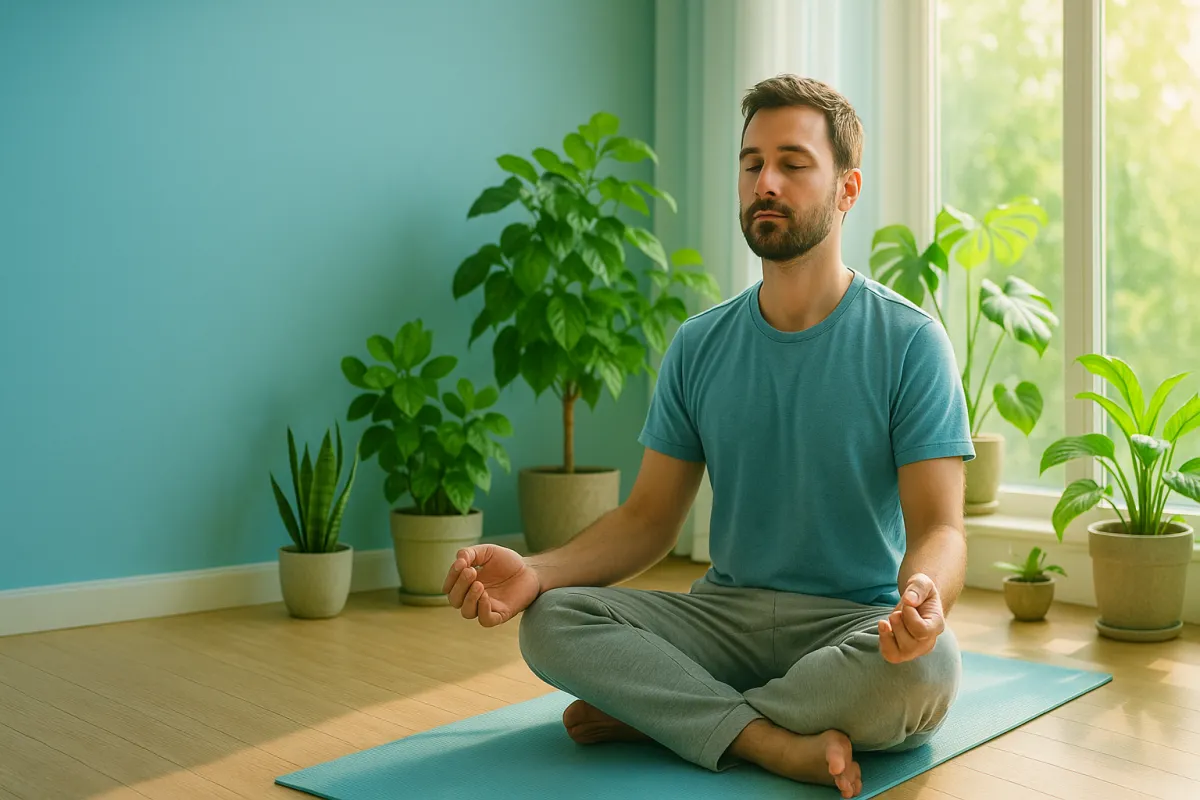
Simple Mindfulness Practices for Sober Living Residents
Find Peace in Your Recovery Journey
At Trinity House Sober Living in Marysville, WA, we support holistic recovery — including the mindfulness practices that bring peace, clarity, and stability to your daily sober life.
📞 (425) 474-3210 | 🌐 trinityhouse.info
Introduction: The Mind Is the Battlefield
Anyone who has been through addiction knows that sobriety is not just a physical challenge — it is primarily a mental one. Cravings, intrusive thoughts, anxiety, emotional triggers, and the restless mind of early recovery can make even a quiet Tuesday feel like a battle. This is exactly why mindfulness has become one of the most recommended and clinically validated practices in addiction recovery.
Mindfulness is not mystical or complicated. It is simply the practice of paying attention — intentionally, gently, without judgment — to what is happening right now. For sober living residents, mindfulness provides tools to navigate the internal storms of recovery without reaching for a substance. Here are seven simple, proven practices you can start today.
What Is Mindfulness in the Context of Recovery?
Mindfulness in recovery means developing awareness of your thoughts, emotions, physical sensations, and environment without being overwhelmed by them. Research in substance abuse treatment has consistently shown that mindfulness-based relapse prevention significantly reduces the frequency and intensity of cravings and lowers relapse rates. The key insight is this: you are not your craving. A craving is a thought and a sensation — it arises, peaks, and passes. Mindfulness gives you the ability to observe a craving with curiosity rather than panic, dramatically reducing its power.
Practice 1: Mindful Breathing (5 Minutes)
The breath is always available and always a pathway back to the present moment. Try this: sit comfortably, close your eyes, and breathe in slowly through your nose for a count of four. Hold for two. Breathe out through your mouth for six. Repeat for five minutes. When your mind wanders — and it will — simply return your attention to your breath without judgment. Over time, this practice rewires the nervous system's stress response and builds your capacity to pause before reacting.
Practice 2: The Body Scan
The body scan is a mindfulness practice that involves slowly moving your attention through different parts of your body, noticing any tension, discomfort, or sensation without trying to change it. It takes about 10–15 minutes and is ideally done lying down. For people in recovery, the body scan is particularly valuable because addiction often involves a deep disconnection from the body. Years of numbing physical and emotional sensation leave many recovering people unaware of what their bodies are telling them. The body scan gently rebuilds that connection.
Practice 3: Mindful Walking
Mindful walking transforms a simple activity into a meditation. As you walk, intentionally notice the sensation of your feet touching the ground, the rhythm of your steps, the sounds around you, the temperature of the air on your skin. Do not multitask — simply walk and notice. For sober living residents, mindful walking is an excellent practice during breaks or when cravings begin to arise. The physical movement combined with present-moment awareness engages both body and mind, making it particularly effective as an in-the-moment coping tool.
Practice 4: Gratitude Meditation
A gratitude meditation is a focused mental practice in which you deliberately call to mind three to five things, people, or experiences you are grateful for, visualizing them clearly and resting in the feeling of appreciation that arises. Research shows that gratitude meditation increases dopamine and serotonin levels naturally, counteracting the emotional flatness common in early recovery. Spend five to ten minutes each morning in a gratitude meditation before looking at your phone or beginning your day.
Practice 5: The 5-4-3-2-1 Grounding Technique
When cravings or anxiety spike, grounding techniques bring you rapidly back to the present moment. The 5-4-3-2-1 technique works like this: name 5 things you can see, 4 things you can physically feel, 3 things you can hear, 2 things you can smell, and 1 thing you can taste. This practice is particularly powerful because it can be done anywhere, at any time, in under two minutes. It interrupts the automatic pull of a craving by forcing cognitive engagement with the immediate environment, breaking the spiral before it gains momentum.
Practice 6: Mindful Eating
After years of disordered habits, many people in recovery have lost the ability to eat mindfully. Meals are rushed, unfocused, and joyless. Mindful eating — taking time to taste, chew slowly, notice flavors and textures, and give thanks before meals — is both a form of mindfulness and a way to rebuild a healthy relationship with the body. Many sober living homes make shared meals a central community ritual. Approach each meal as an opportunity to practice presence. Put your phone away. Look at the people around you. Taste your food.
Practice 7: Journaling as Mindfulness
Writing is one of the most powerful forms of mindfulness available. When you write honestly about what you are thinking and feeling, you externalize the internal — you bring the chaos of the mind onto the page where it can be seen, examined, and processed. Even five to ten minutes of free-writing each day can dramatically reduce stress and improve emotional clarity. There is no wrong way to journal in recovery. Write about your day, your fears, your gratitude, your progress, your setbacks. The goal is not beautiful prose — it is honest awareness. Over time, your journal becomes a record of your growth, which itself becomes a powerful source of motivation and hope.
Conclusion: Start Small, Stay Consistent
You do not need to master all seven of these practices at once. Choose one, commit to it for two weeks, and notice what changes. Mindfulness is not a destination — it is a daily practice that deepens with time. In sober living, every day is an opportunity to show up more fully for your life. Mindfulness simply helps you do that with greater grace and intention.
Start Your Recovery at Trinity House
Trinity House Sober Living in Marysville, WA offers a structured, supportive environment where men in recovery learn tools like mindfulness that lead to lasting sobriety and a fulfilling life.
📞 Call or Text: (425) 474-3210
Trinity House Sober Living — Marysville, WA