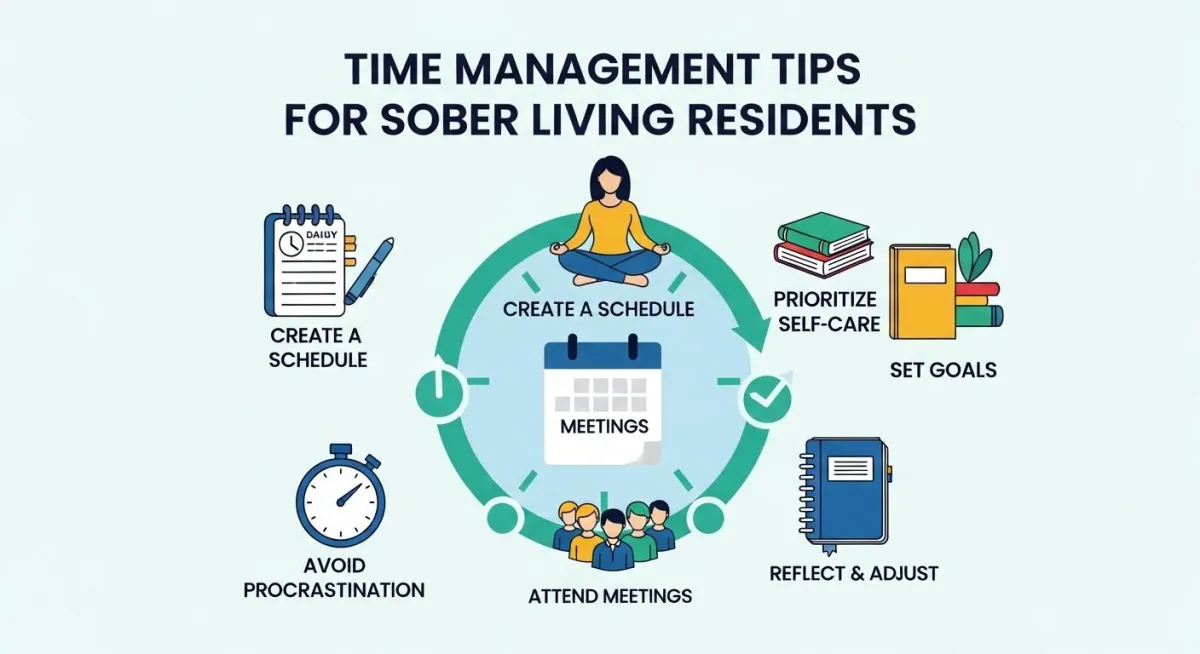
Time Management Tips for Sober Living Residents
🏠 Looking for a Sober Living Home in Marysville, WA? Trinity House Sober Living offers a structured, supportive, and community-focused environment where men in recovery can build the skills and confidence needed for lasting sobriety. Hope lives here. 📞 (425) 474-3210 | 🌐 trinityhouse.info | ✍️ Apply Now: trinityhouse.info/application
One of the most powerful — and often overlooked — tools in recovery is effective time management. In early sobriety, unstructured time can become a breeding ground for boredom, cravings, and old habits. Learning how to plan, prioritize, and protect your time is not just a practical life skill; it is a recovery skill. Whether you are brand new to sober living or several months into your journey, these time management strategies will help you build a purposeful routine that supports your sobriety and your goals.
Why Time Management Matters in Recovery
Addiction often thrives in chaos — irregular sleep schedules, impulsive decisions, and days without direction. Sober living is about replacing that chaos with intention. When your time has purpose, you have less mental and emotional space for cravings to take hold. Structure also builds confidence. Each day you follow through on a plan, you prove to yourself that you are capable, reliable, and growing.
Tip 1: Start Every Morning with a Written Plan
Before you reach for your phone or turn on the TV, take five to ten minutes each morning to write down what you want to accomplish that day. This does not need to be an elaborate schedule — even a short list of three to five priorities gives your day a clear direction. Writing it down matters; it transforms vague intentions into real commitments. Keep a small notebook on your nightstand, or use a free app like Google Keep or Todoist.
Tip 2: Use Time Blocks to Structure Your Day
Time blocking means assigning specific chunks of time to specific activities. For example: 7–8 AM for morning routine and breakfast, 9–11 AM for job searching or work, 12–1 PM for lunch and a walk, 2–4 PM for chores or errands, 6–7 PM for a recovery meeting, and 9–10 PM for journaling and wind-down. This approach eliminates the "what should I do now?" paralysis that can make idle time feel overwhelming. It also makes it much easier to honor your commitments to house meetings, curfews, and check-ins.
Tip 3: Prioritize Your Recovery Commitments First
Your sobriety is the foundation that everything else is built on. Before you schedule work shifts, social plans, or errands, block out time for your non-negotiables: 12-step meetings or other recovery programs, therapy or counseling appointments, house meetings and check-ins, medication schedules if applicable, and daily self-care like exercise, journaling, and sleep. Treating these appointments with the same seriousness you would give a job interview trains your brain to prioritize recovery above convenience.
Tip 4: Learn to Say No — and Mean It
Poor time management often comes from overcommitting or allowing other people's priorities to crowd out your own. In recovery, protecting your schedule is protecting your sobriety. It is okay to decline an invitation, skip a social event, or leave early if staying longer would put you in a risky situation or throw off your routine. Practice saying, "I appreciate the invite, but I already have a commitment that evening." No explanation needed.
Tip 5: Identify and Eliminate Time Drains
Take an honest look at where your time actually goes. Common time drains in sober living include excessive scrolling on social media, watching TV for hours without intention, spending time with people who do not support your recovery, and procrastinating on responsibilities like job applications or financial obligations. You do not have to eliminate leisure time — rest and enjoyment are important parts of a balanced life in recovery. But be honest about whether your leisure is restorative or avoidant.
Tip 6: Build a Consistent Sleep Schedule
Sleep is the cornerstone of every other time management strategy. When you are sleep-deprived, your willpower is lower, your emotions are harder to regulate, and your ability to follow through on plans diminishes significantly. Aim for seven to nine hours of sleep per night. Set a consistent bedtime and wake-up time — even on weekends. Create a simple wind-down routine: turn off screens an hour before bed, do some light stretching or reading, and keep your bedroom environment calm and dark.
Tip 7: Use the "Two-Minute Rule" to Stop Procrastinating
Procrastination is one of the biggest enemies of good time management, and in recovery it can lead to mounting stress that becomes a trigger. The two-minute rule is simple: if a task will take two minutes or less, do it immediately. Reply to that text, wash those dishes, make that phone call. Knocking out small tasks right away prevents them from piling up into an overwhelming to-do list and gives you a small but meaningful sense of accomplishment throughout the day.
Tip 8: Review Your Week Every Sunday
Set aside 20–30 minutes each Sunday to review the past week and plan the week ahead. Ask yourself: What did I accomplish? What did I avoid? Where did I struggle with my time? What is coming up next week that I need to prepare for? This weekly review habit is used by some of the most productive people in the world, but it is especially valuable in recovery because it keeps you self-aware and course-correcting before small issues become big problems.
Tip 9: Keep Your Living Space Organized
A disorganized environment is a disorganized mind. When your room, your workspace, and your shared living areas are cluttered and chaotic, it becomes much harder to think clearly and follow through on your schedule. Spend a few minutes each day tidying your space. Assign a place for everything you use regularly — your keys, your phone charger, your recovery literature, your work uniforms. You will waste less time looking for things and feel calmer and more in control of your day.
Tip 10: Celebrate Progress, Not Perfection
You will not follow your schedule perfectly every day, and that is completely okay. Recovery is not about being perfect — it is about making progress. When you miss a goal or have a chaotic day, resist the urge to beat yourself up. Instead, acknowledge what went sideways, give yourself grace, and recommit to your plan tomorrow. Consistency over time matters far more than any single day. Every day you show up and try is a day worth celebrating.
Putting It All Together
Effective time management in sober living is not about running a rigid military schedule. It is about creating enough structure that you feel grounded, enough flexibility that you can adapt, and enough intention that each day moves you closer to the life you are building. Start with one or two of these tips this week. As they become habits, layer in more. Over time, you will look back and be amazed at how much has changed — not just in your schedule, but in your confidence, your relationships, and your recovery.
🏠 Ready to Take the Next Step in Your Recovery? Trinity House Sober Living in Marysville, WA is a safe, structured, and community-focused home for men in recovery. We walk alongside you every step of the way. 📞 (425) 474-3210 | 🌐 trinityhouse.info | ✍️ Apply: trinityhouse.info/application